Eagle Route Revisited
With the temperatures in upstate New York having recently plummeted into the teens and single digits, I thought it might be worth a look to see if there was any ice coming down the river. It’s a bit early for that phenomenon to occur here in the Mid-Hudson, but if there was ice, there may well be Bald eagles. As soon as I crossed the Bear Mountain Bridge, I knew my hopes were not to be realized. No ice to the south and nothing to the north. Guess it will take a few more weeks to get our flows down in this part of the valley. Nonetheless, I decided it was worth the time and effort to see if any other birds from the north had made it down here in our corridor.
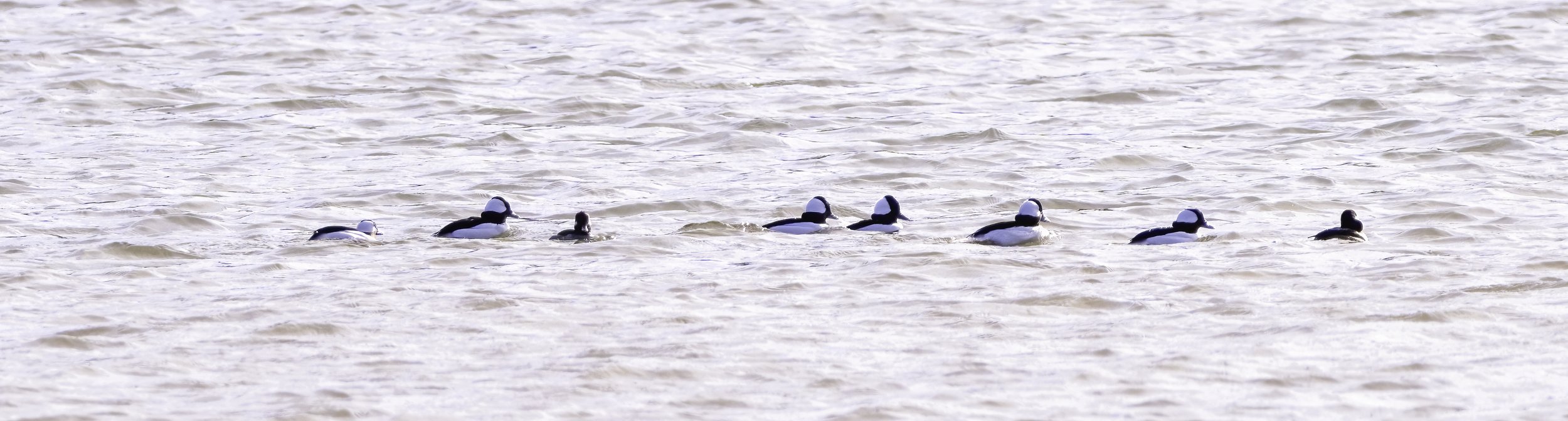
Buffleheads in Croton Bay 12/11/25
My first stop of the day is Croton Train Station and Croton Bay. The Bay can be a magnet for wintering waterfowl and the late fall migrant Buffleheads are now here for the winter. This diminutive diving duck is certainly a sign that the winter season is upon us. It wouldn’t be the winter solstice without the presence of these handsome little ducks. On my last trip down here a couple of weeks ago, I did find Common mergansers, but none were to be had today. Perhaps they are on the far side of the bay too distant to be seen from the boat launch where I was located.

Song sparrow - Croton Point Park - 12/11/25
Certainly not a rarity, but always a pleasure to see, the Song sparrow was working the brush along the roadside on the way up to the Nature Center. The feeders up at the Center have not been attended to and there were no songbirds at the top of the drive. But all along the road on the way up, these Song sparrows and a good number of White-throated sparrows were making their presence known. Plenty of Canada geese were down near the beach as well as Ring-billed gulls. Of these only the White-throated could be considered a “winter bird”, so a little disappointing as far as what my search was all about today. On to the next “port of call”….George’s Island.
Entering the drive into George’s Island Park in Montrose, I almost ran over a medium sized black snake slithering across the macadam. How strange to see this snake out in the cold! Normally, they tend to hibernate in colder weather. I pulled past him, parked, and tried to approach as quietly as possible, but apparently he had crawled into the brush along the roadside. I was not the only one looking for him, but for different purposes. As I got closer to the spot where I thought he had entered the heavier vegetation, a Cooper’s Hawk flew out from the thicket and perched above me. Looks like both of us came away empty “handed” (or taloned as the case may be)
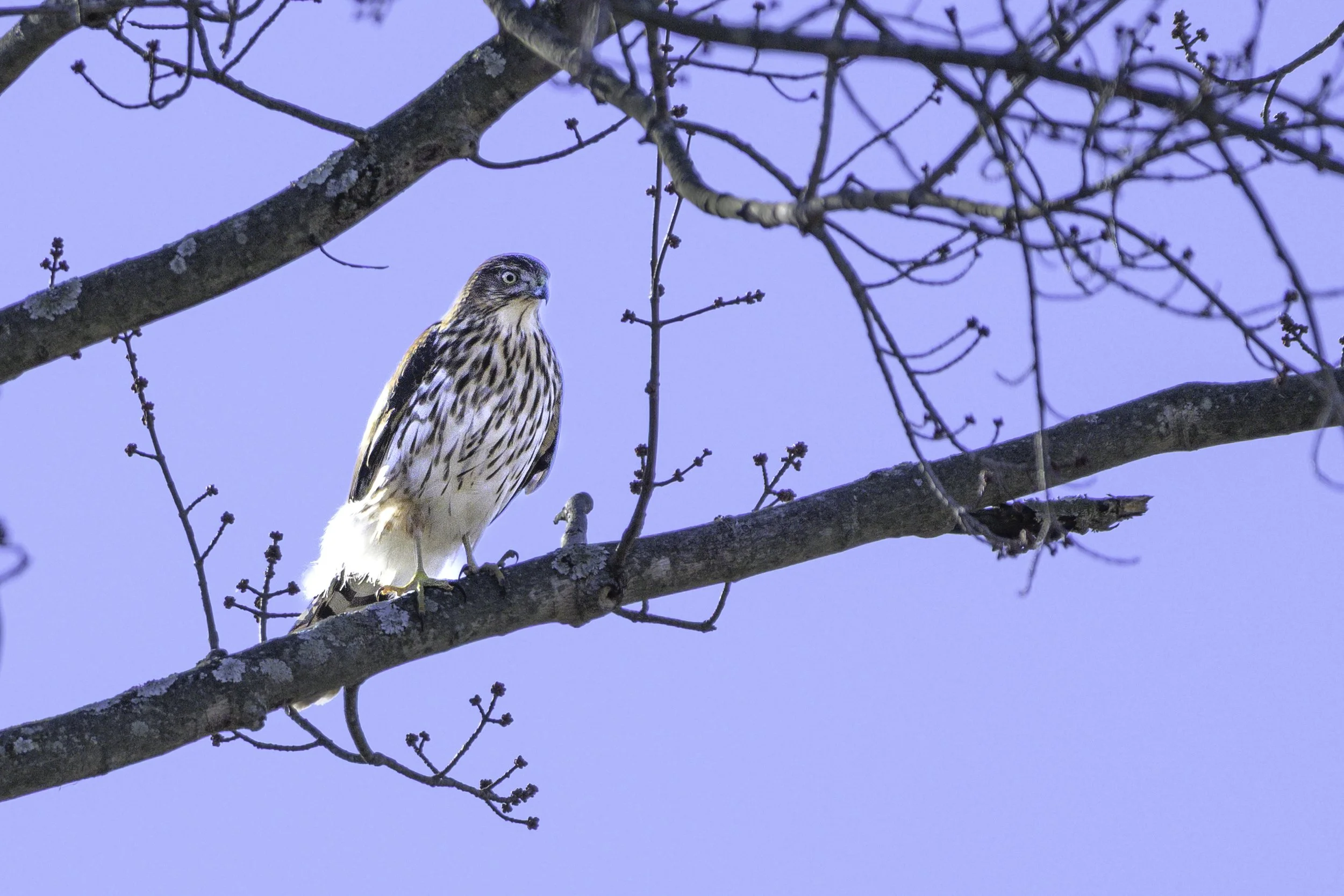
A hungry Cooper’s hawk along the entrance to George’s Island Park - 12/11/25
George’s Island often attracts good numbers of Bald eagles when they are plentiful with the colder weather. It’s not rare to have a dozen or more roost here at day’s end in late December and January. Too early in the season for that today, however.
Just a few mile north of George’s Island at Verplanck Nature Park, I did find some more winter visitors. Two species of waterfowl which are not commonly found around here in summer months were the Hooded merganser and the Ring-necked duck.
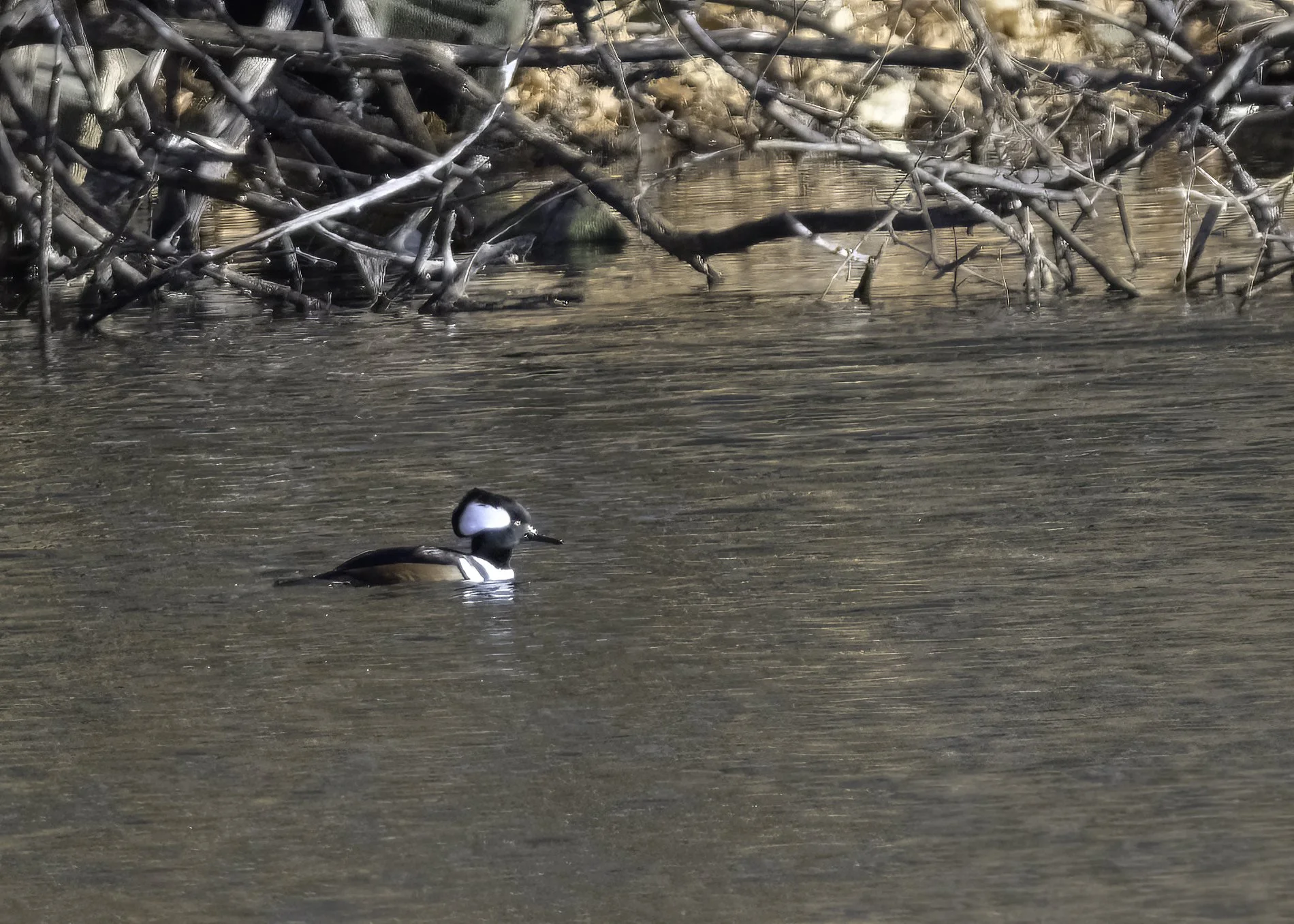
Hooded merganser on pond at Verplanck Nature Center 12/11/25
The Hooded merganser is not uncommon in upstate New York, but not often seen here in the mid-Hudson. This a short distance migrant and this is about as far as he cares to venture from his spring and summer quarters in Canada and the Adirondacks. Of the mergansers found in New York, he is the smallest and to my mind the most striking of his family with his rich mahogany flanks and black and white head and breast.
The Ring-necked duck is another very handsome duck with its black head and back, and a white bar separating its gray sides from a black chest. We are on the edge of their wintering grounds so it’s always a pleasure to see these birds show up in late fall and early winter.
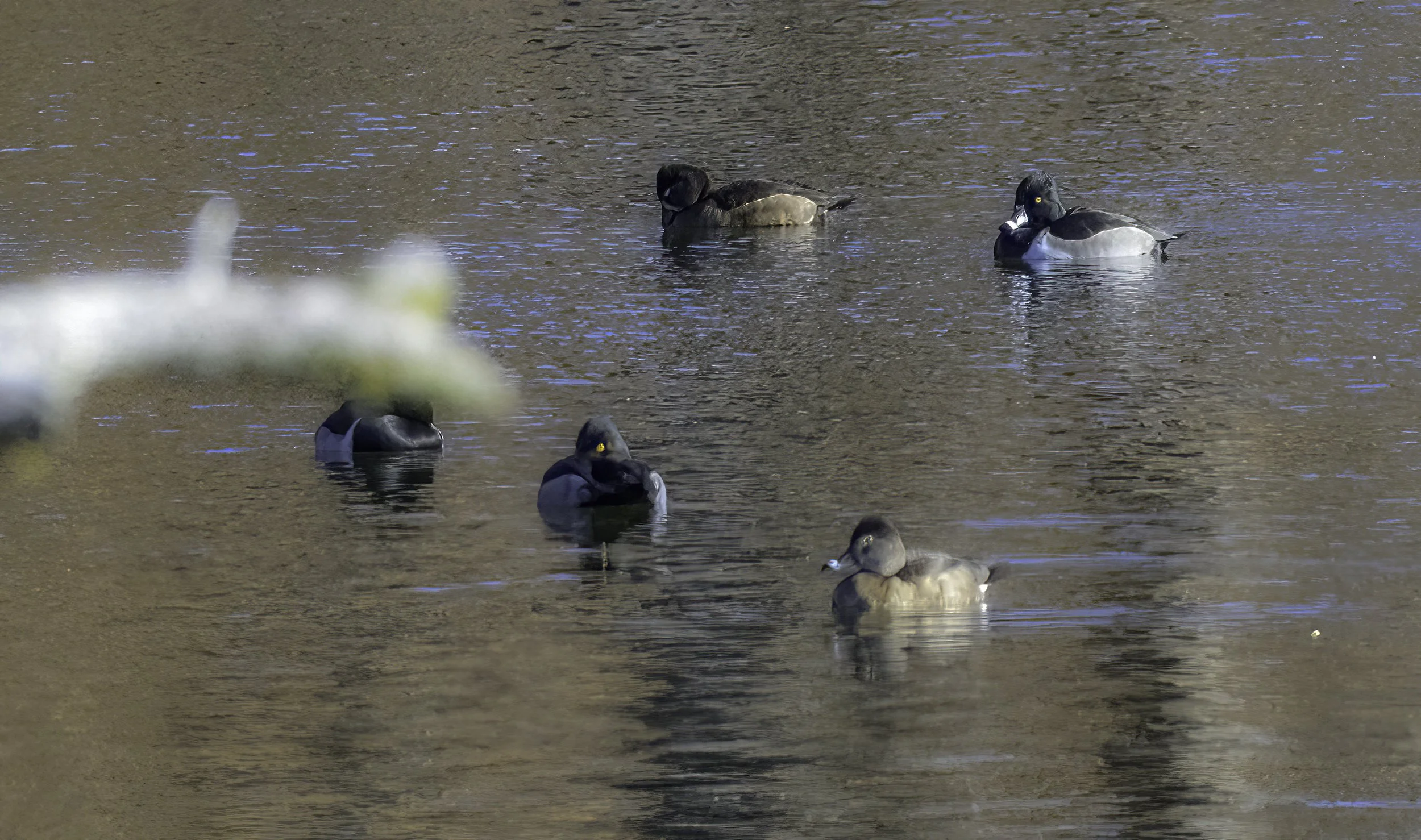
Ring-necked ducks on pond at Verplanck Nature Park 12/11/25
In spite of his looks, this duck is NOT a Ring-billed duck! The males brilliant white ring around the bill is one of the most diagnostic characteristics of this bird, but it is named for a very faint brownish ring around the neck only seen by those who are very close to him. The other stand-out feature of this Ring-neck is his bright yellow eye. Gorgeous bird!
Continuing north, I stopped at Charles Point Marina (formerly Crystal Bay). This is another site that can be very productive for viewing eagles when the ice is on the river. We do have a number of resident Bald eagles in this vicinity, so whether the bird I photographed today was a winter visitor or a resident, I couldn’t say. Whatever, it’s always great to see these majestic birds of prey along the banks of the Hudson.
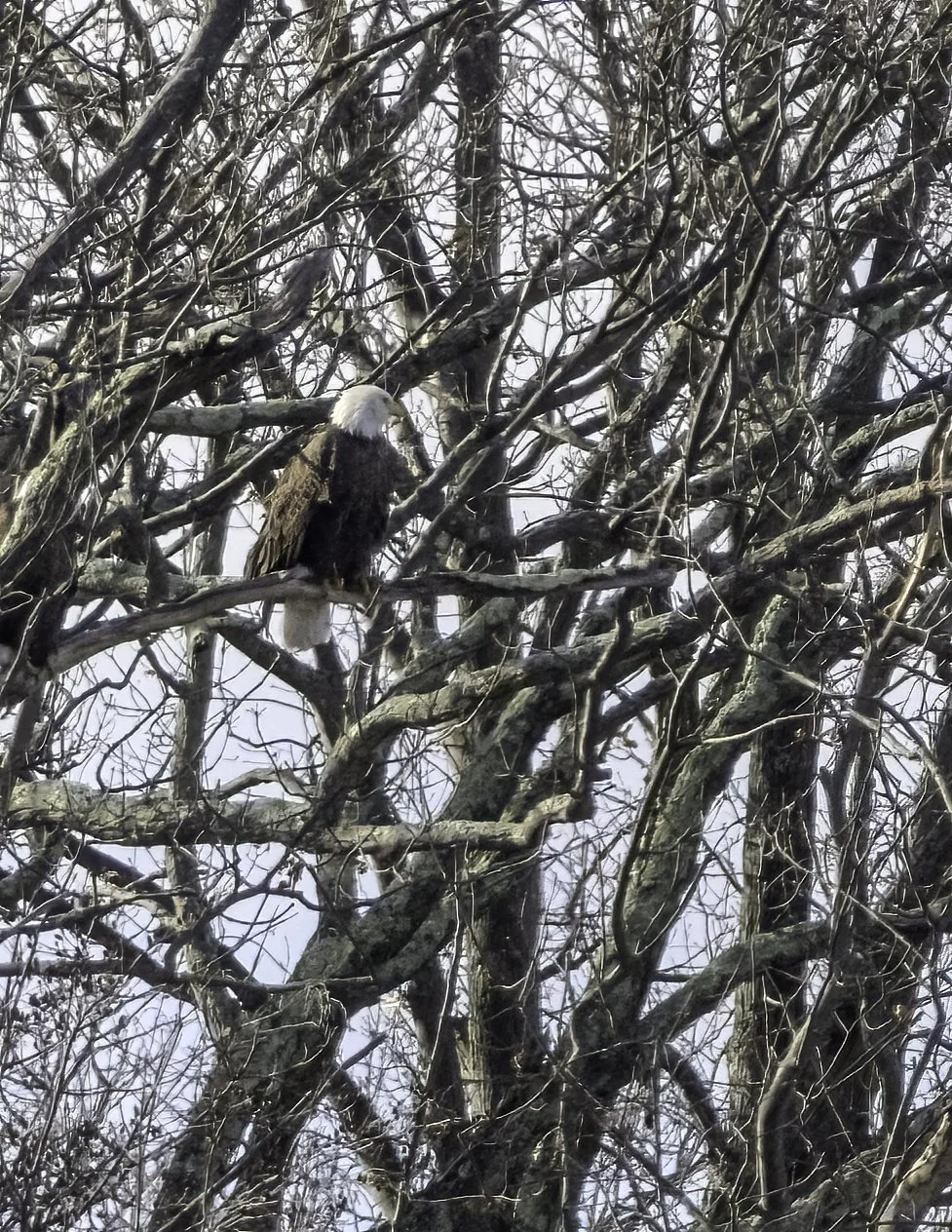
Adult Bald eagle at Charles Point Marina - 12/11/25
Last stop on the journey northward was Charles Point Park. Again, during the winter when the ice is on the river, this bay can become choked with ice flowing down from the north. It is not uncommon to have several dozen eagles sitting out on the ice later in the winter. For now, my prime interest was looking out to the channel marker. The rock base is commonly occupied by cormorants. During the warmer months, there are Double-crested cormorants that form the crowd at the base of the marker. As we head into winter, however, the DC’s head south and their position is taken over by Great cormorants from the north. Notice the white patch at the base of the bill. This as well as a considerable size difference, let’s us know that the Great cormorants are back and so is winter!
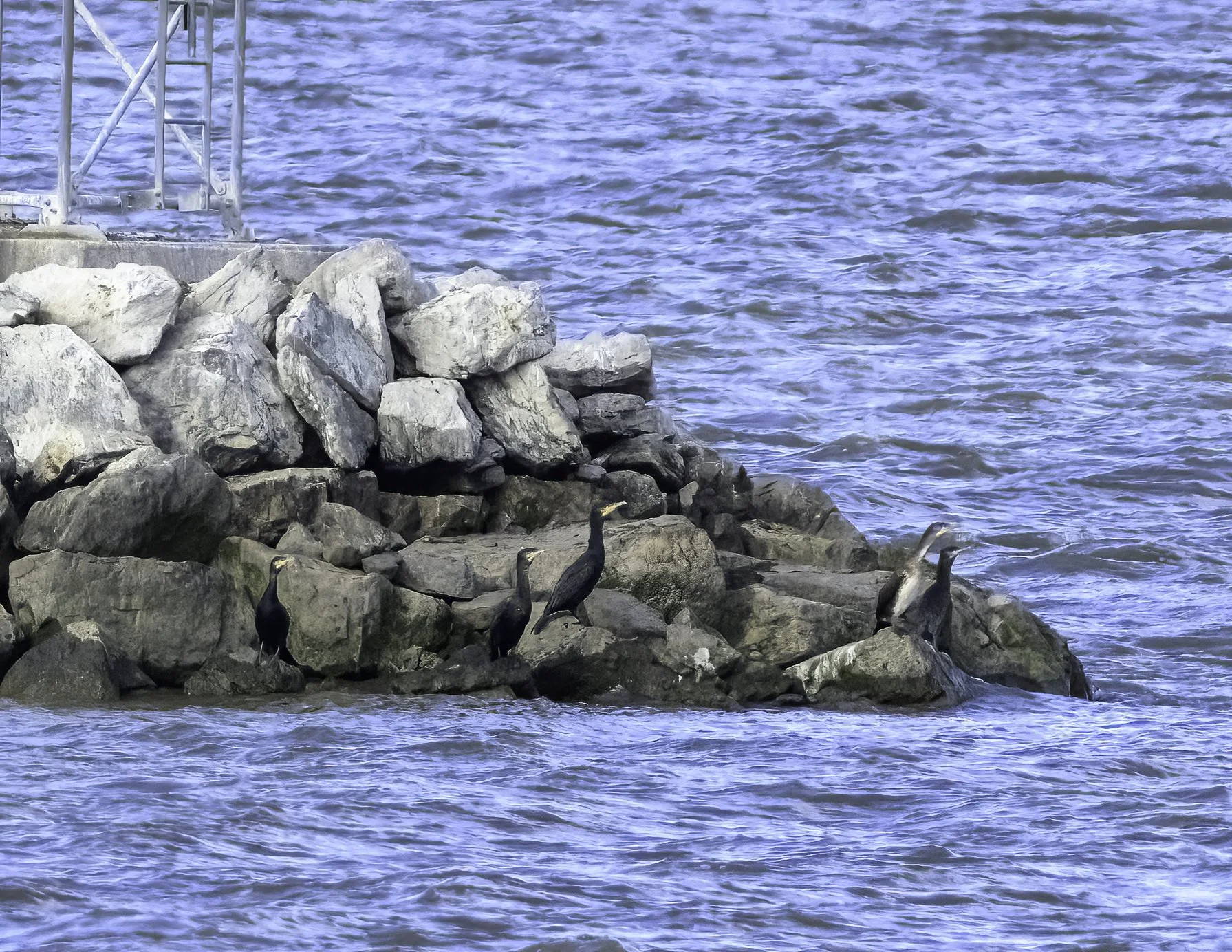
Great Cormorants at the base of a channel marker in Peekskill Bay 12/11/25