Merritt Island - Birds and Butterflies
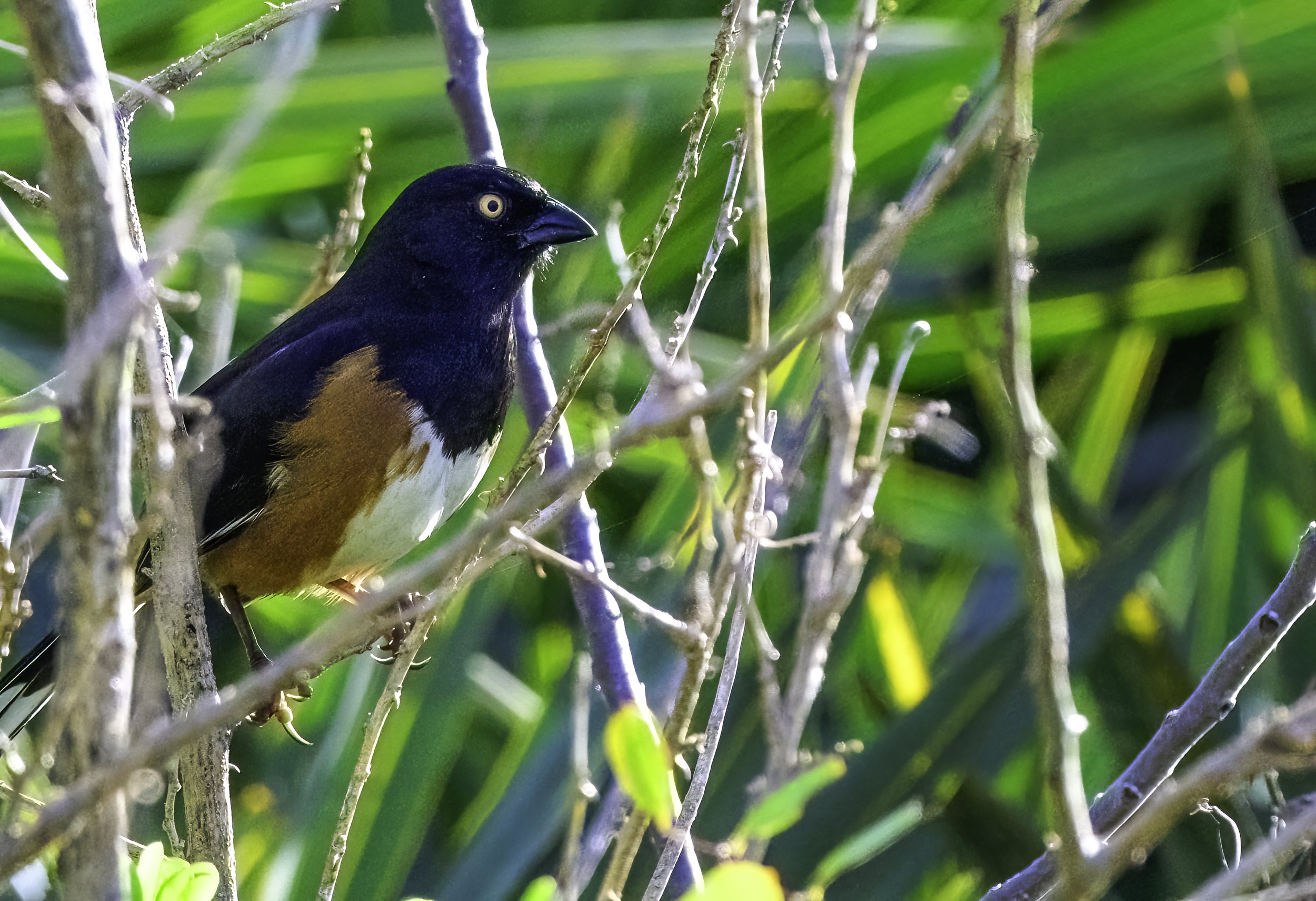
Eastern towhee - Pine Flatwoods Trail - 4/3/26
We joined the Southeast Volusia Audubon this morning for a field trip through Merritt Island NWR and then continued to cover a few more of the less visited areas of the park. Much of the avifauna has moved on to the northern breeding grounds already, but there is still enough of the resident birds and butterflies to keep us actively engaged. One of our first stops was the Pine Flatwoods Trail where we were hoping to find the Florida Scrub Jay. This short trek through the scrub habitat has proven to be one of the most reliable for Florida’s new state bird. It’s also perfect habitat for the Eastern Towhee and we were lucky enough to have one peek out at our group as we traversed the flatwoods. Throughout most of its range, the towhee has a red iris, but here in Florida, the iris is white to pale yellow as was the case with our bird today.
It was not long before we did find our target, the Florida scrub jay. This iconic bird of Florida is very social and if you find one, chances are real good that there will be several in the area. With a loud raspy call, it is often heard before seen, but they are certainly not shy and will quickly come around to see who or what has come into their territory.
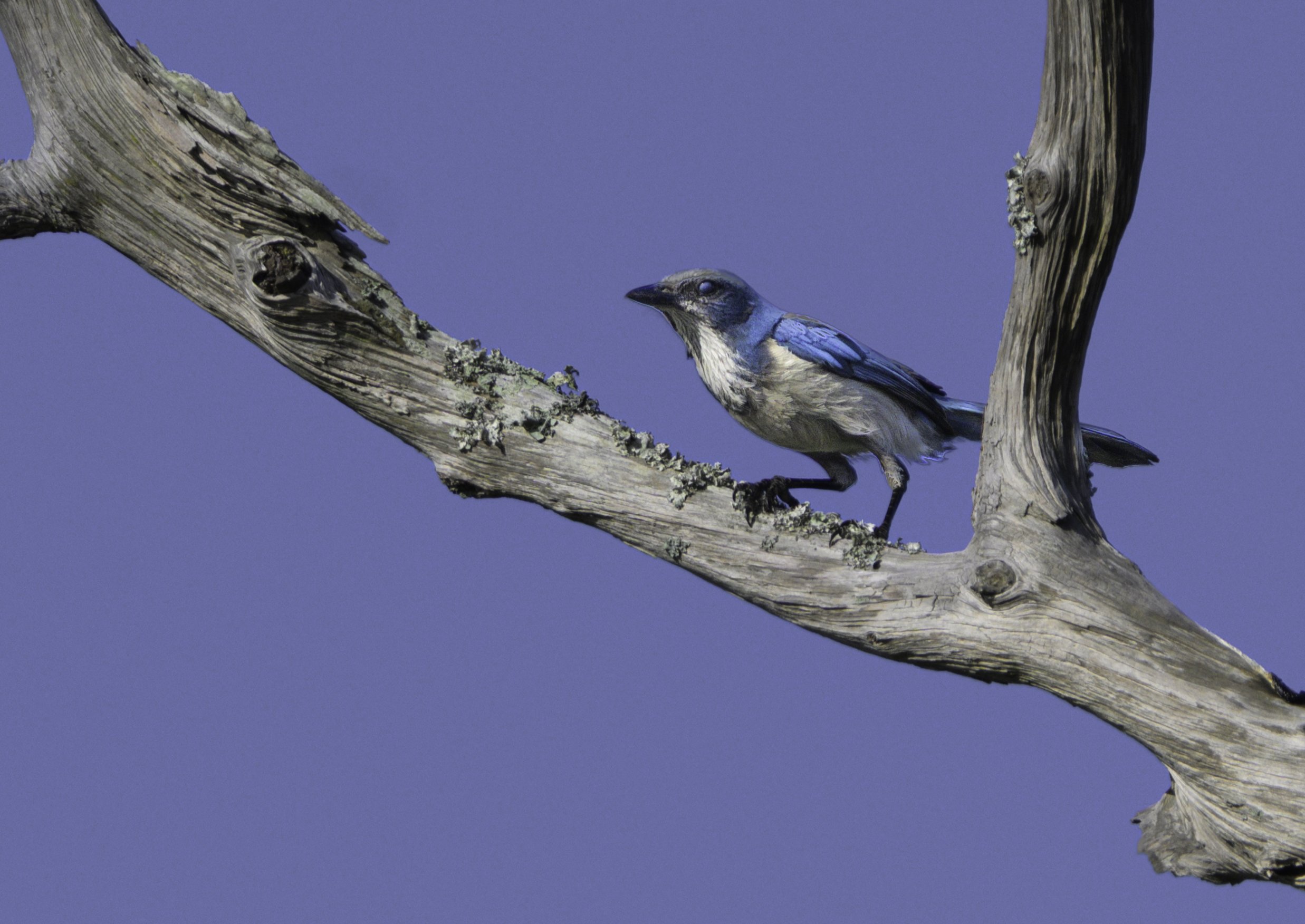
Florida Scrub Jay - Pine Flatwoods Trail - 4/3/26
Having checked off the jay for the day’s list, we move onto our next area of interest, Black Point Drive. We spend a lot of time driving around this 8 mile loop while we are down here in Florida. It seems that every time you come here, there is something new to see and other species that have moved on. Today, waterfowl was almost entirely absent. One of America’s largest birds, the White pelican was on site though, gathering in large numbers as they prepare for their migratory flight to the northern Great Plains. Today, we witnessed one flock of close to 100 flying low over the wetlands and gradually rising to heights until they were almost out of sight, all with hardly a single wingbeat.

Part of the massive flock of White pelicans flying over Black Point Drive - 4/3/26
While the birds were a bit scarce, the butterflies have begun to show up and we always had something at our feet to check out. A beautiful Queen butterfly was one of the first to make an appearance.
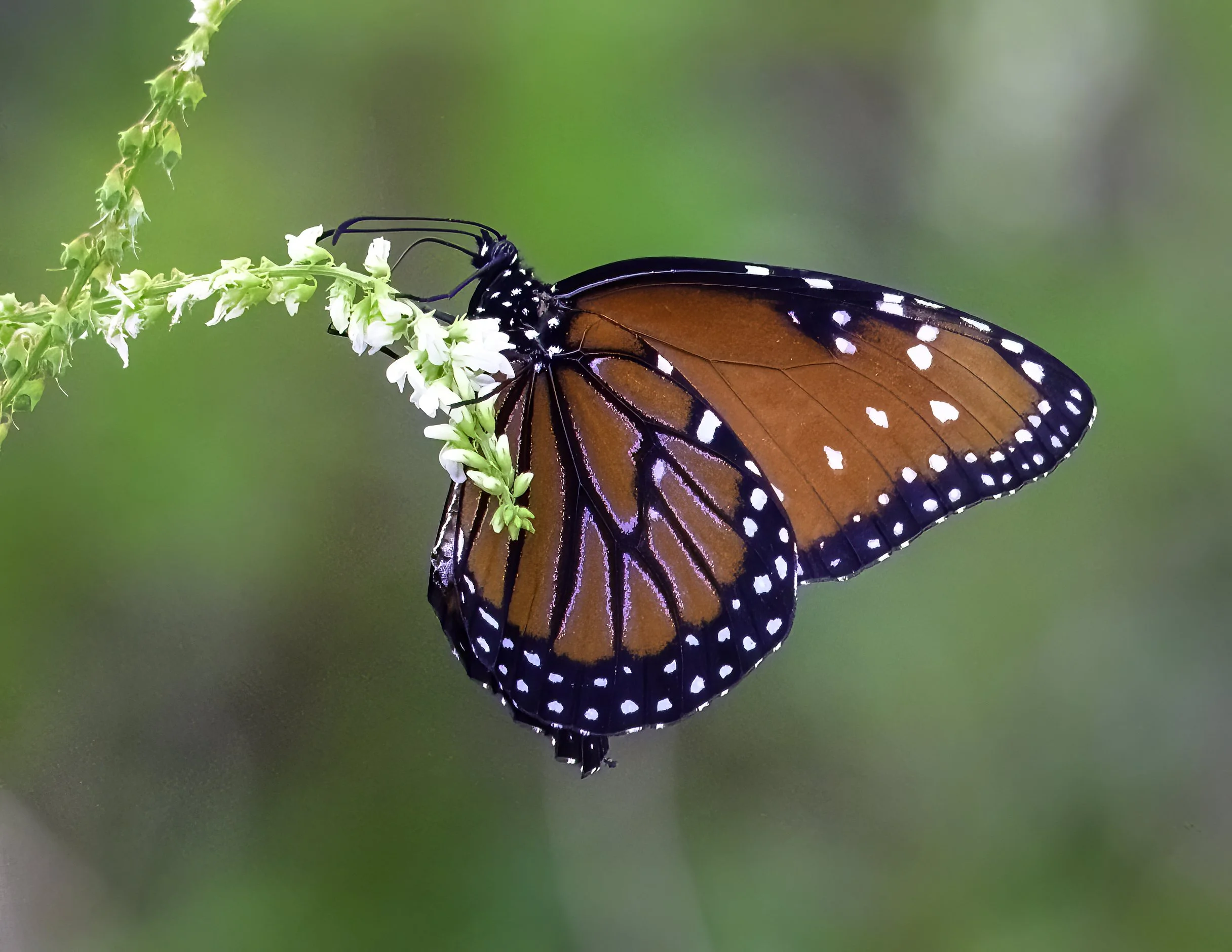
Queen butterfly - Black Point Drive - 4/3/26
The Queen looks a bit like the Monarch, but unlike that butterfly, she is more of a “home-body'“ Monarchs are well known for their amazing migration across the US down into Mexico each year, but the Queen will tend to remain in the warm southern climate year-round. The only migration the Queen will undertake will be to get to higher elevations if the lowlands get too dry.
As we finished our drive around Black Point, it was time to head over to the Visitors Center to have our lunch and check on the feeders for a sighting of the Painted buntings. Sadly, we struck out on the buntings, but while we sat eating our picnic lunch, it was possible to see and photograph some more butterflies. The first to catch my attention was a White peacock. From the looks of it, this little butterfly has had a couple of close encounters with the local bird population. Here tattered wings show signs of some tough times.
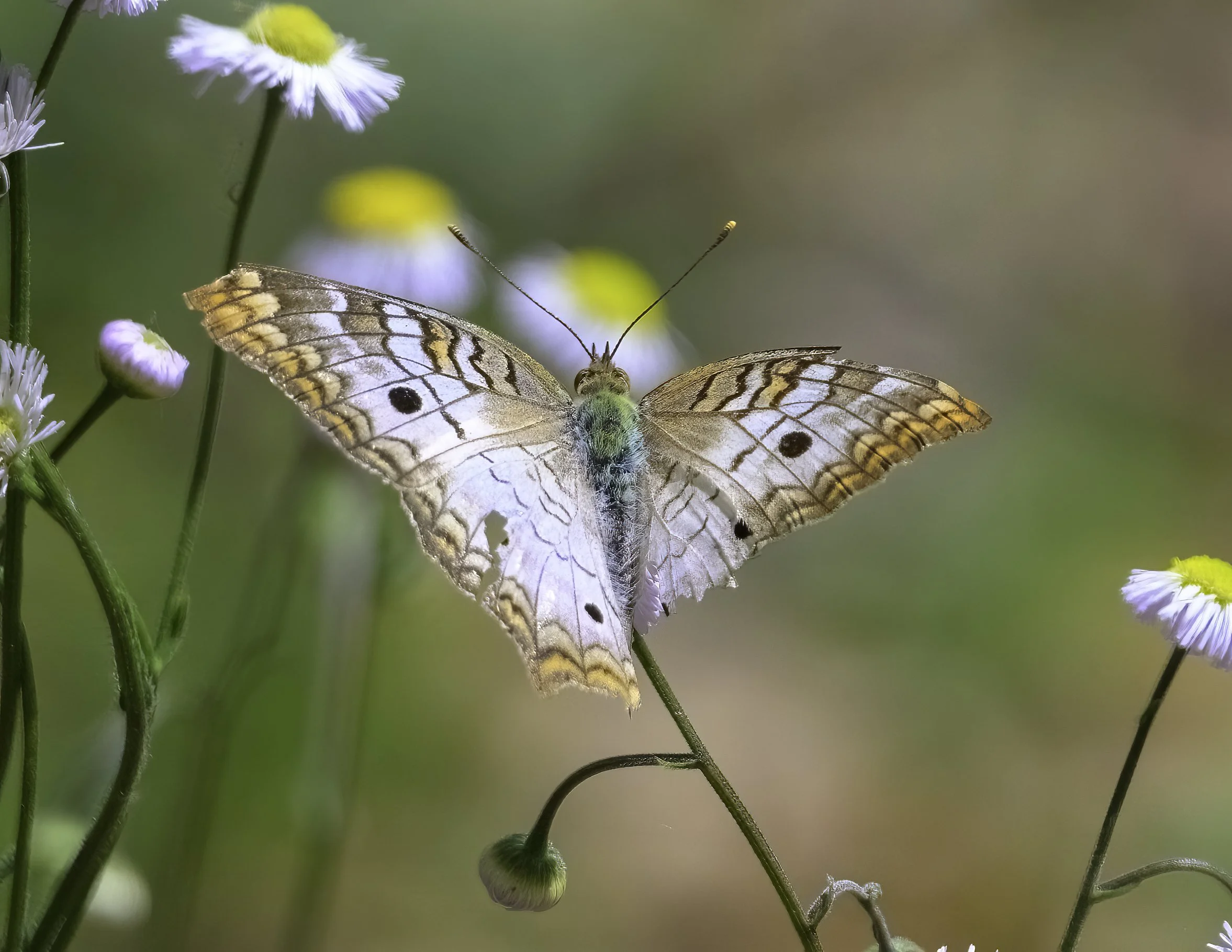
White peacock - Visitors Center - 4/43/26
Sharing the same wild flowers were a pair of Phaon Crescents. This beautiful butterfly supposedly is named after a Greek mythological figure who was originally a poor rather homely boatman who transported Aphrodite across a body of water and then refused payment. As a reward, she transformed him back to his youthful handsome self, reflecting this butterfly’s striking appearance.
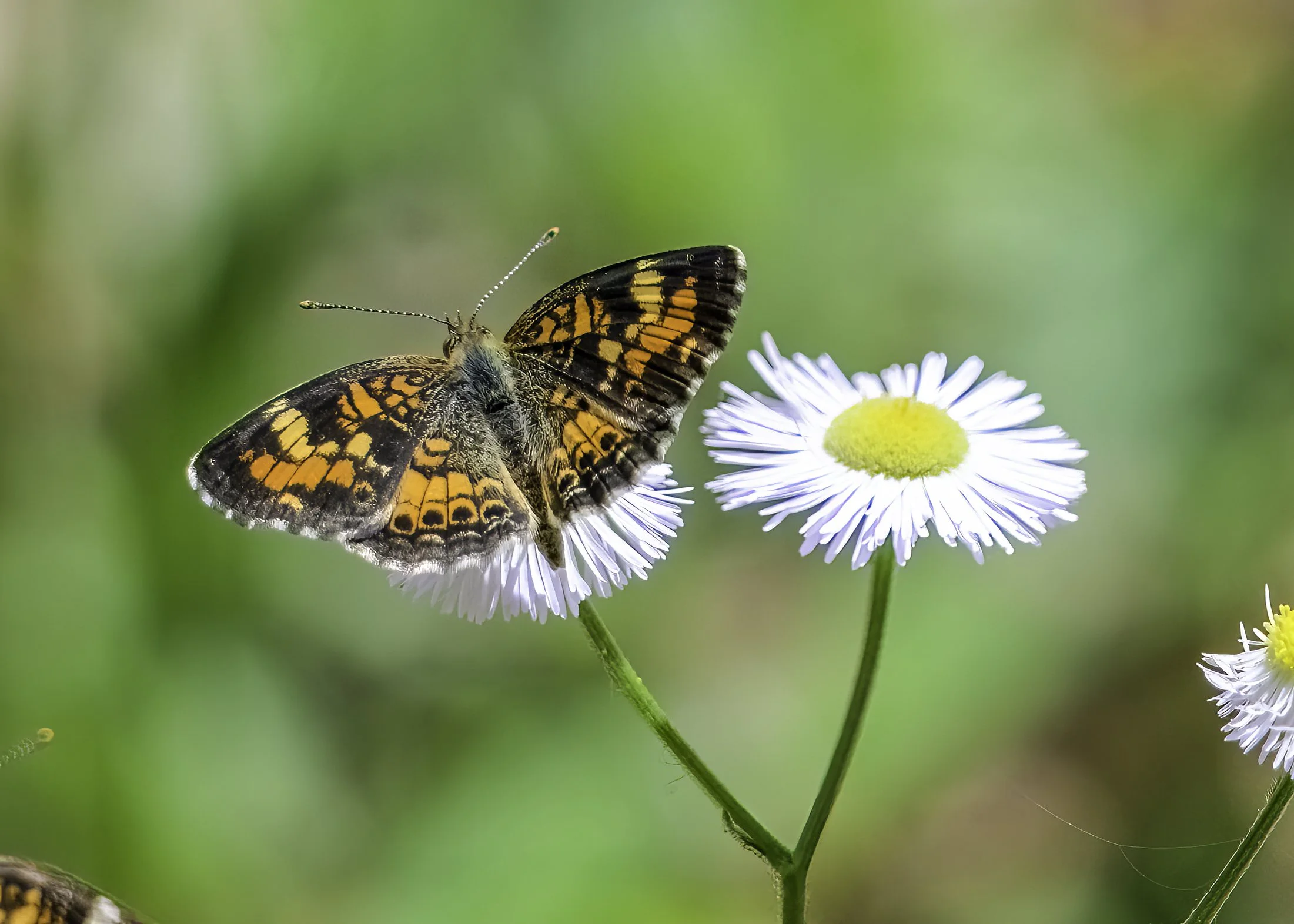
Phaon Crescent - Visitors Center - 4/3/26
This is another butterfly those of us from the north will only see during our time down here as its range is restricted to the southlands from Florida to California.
One more butterfly to mention today is the Great Southern White. It’s been quite evident over this past week that this is the time for these butterflies to be on the move. Flowering shrubs are literally covered with these little white butterflies and hundreds will pass you by as you stand or sit in one place for more than several minutes.
The Great Southern White butterfly (Ascia monuste) undertakes seasonal movements along the Gulf and Atlantic coasts of the southeastern United States, driven primarily by temperature shifts and the availability of its host plants. During warm months individuals expand northward into coastal Carolinas and occasionally further. Cooler seasons trigger a retreat toward more southerly Gulf Coast and Florida refuges, resulting in a dynamic, range-wide ebb and flow rather than a single, long-distance mass migration. Local wind patterns, habitat connectivity, and larval food-plant distribution strongly influence the timing and extent of these population movements.
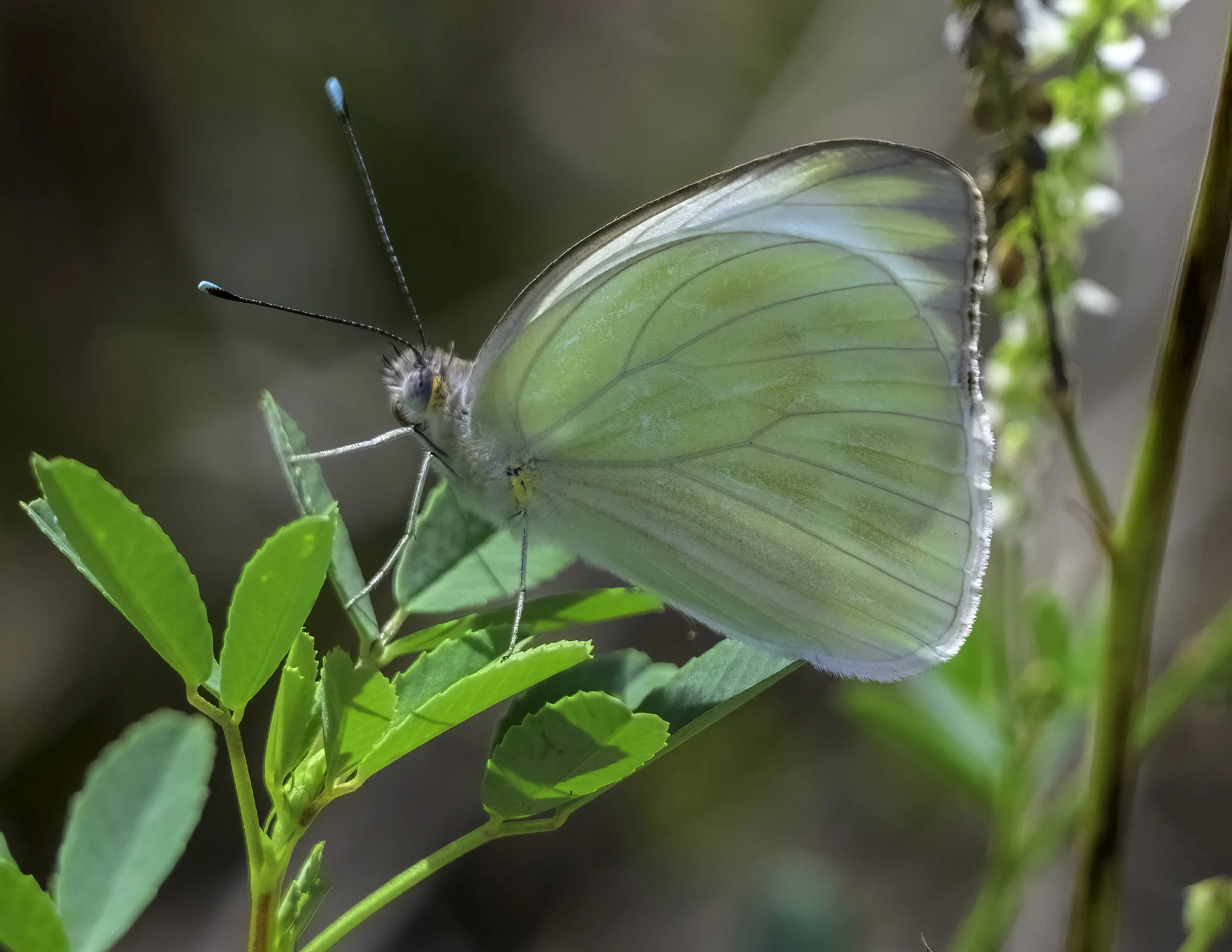
Great Southern White (notice dark triangles along the rear wing edges) 4/3/26
The natural world is in a constant state of flux. It’s not just seasonal change but seemingly diurnal fluctuations that can keep us engaged with this beautiful planet.