Back north
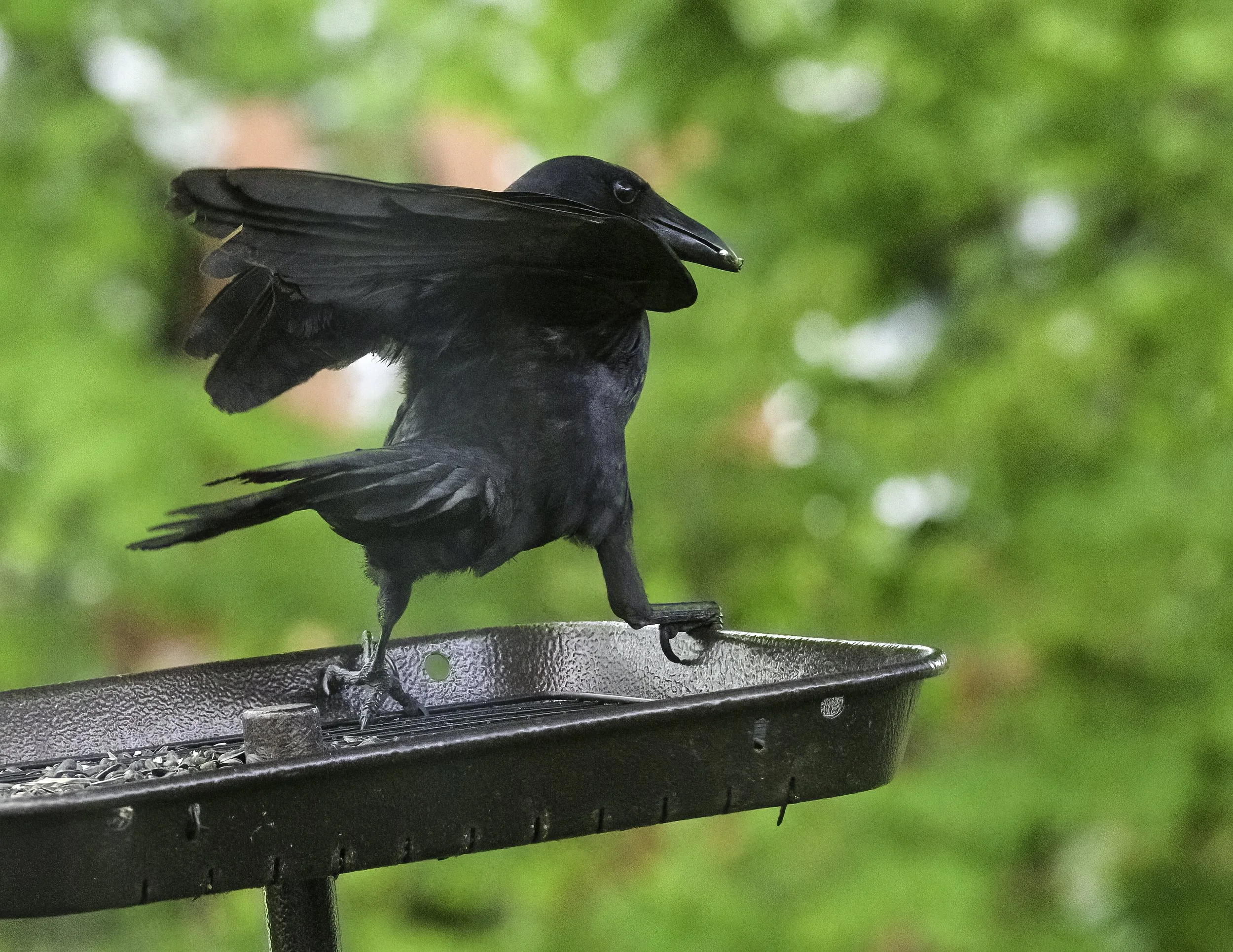
Fish crow - Back Yard Feeder - 4/29/26
One of my first tasks when we returned home in New York was to refill a few of our feeders. It’s Kentucky Derby week which means we start looking for the annual (almost) return of the Rose-breasted grosbeaks and I have to make sure that there are feeders available to them should they show up in the neighborhood. The day after refilling the platform feeder with Black Oil Sunflower seeds, I was enundated with corvids. One of my first birds to come in for a bite was of all things a Fish crow! It’s like I never left Florida! We always have Fish crows flying by our deck and out in the parking lot of our condo complex down south, but this is the first time I can recall ever having these crows show up at our feeders here in New York. They are around the neighborhood to be sure, but never at our feeding stations.
As it turned out, this was going to be the “day of the corvids”. Along with the crows huge numbers of Bluejays showed up. This is the time for the jays to be returning from their wintering grounds down south. Bluejays are “Facultative migrants” and their migratory activity is dictated greatly by changes in the weather and food availability rather than strict seasonal instinct. While some bluejays remain year-round within their breeding range, others move southward in autumn in unpredictable waves, sometimes covering dozens to a few hundred miles, and may return north in varying numbers the following spring. These movements are influenced by fluctuations in mast crops (acorns, beechnuts), insect abundance, and harsh winter conditions which prevailed in the northeast this past winter. Because migration is inconsistent among individuals, flocks can appear suddenly at feeders or be conspicuously absent for seasons, making bluejay migration a fascinating example of facultative movement ecology. This was one of those years when the flocks appeared suddenly in great numbers if only for a day or two.
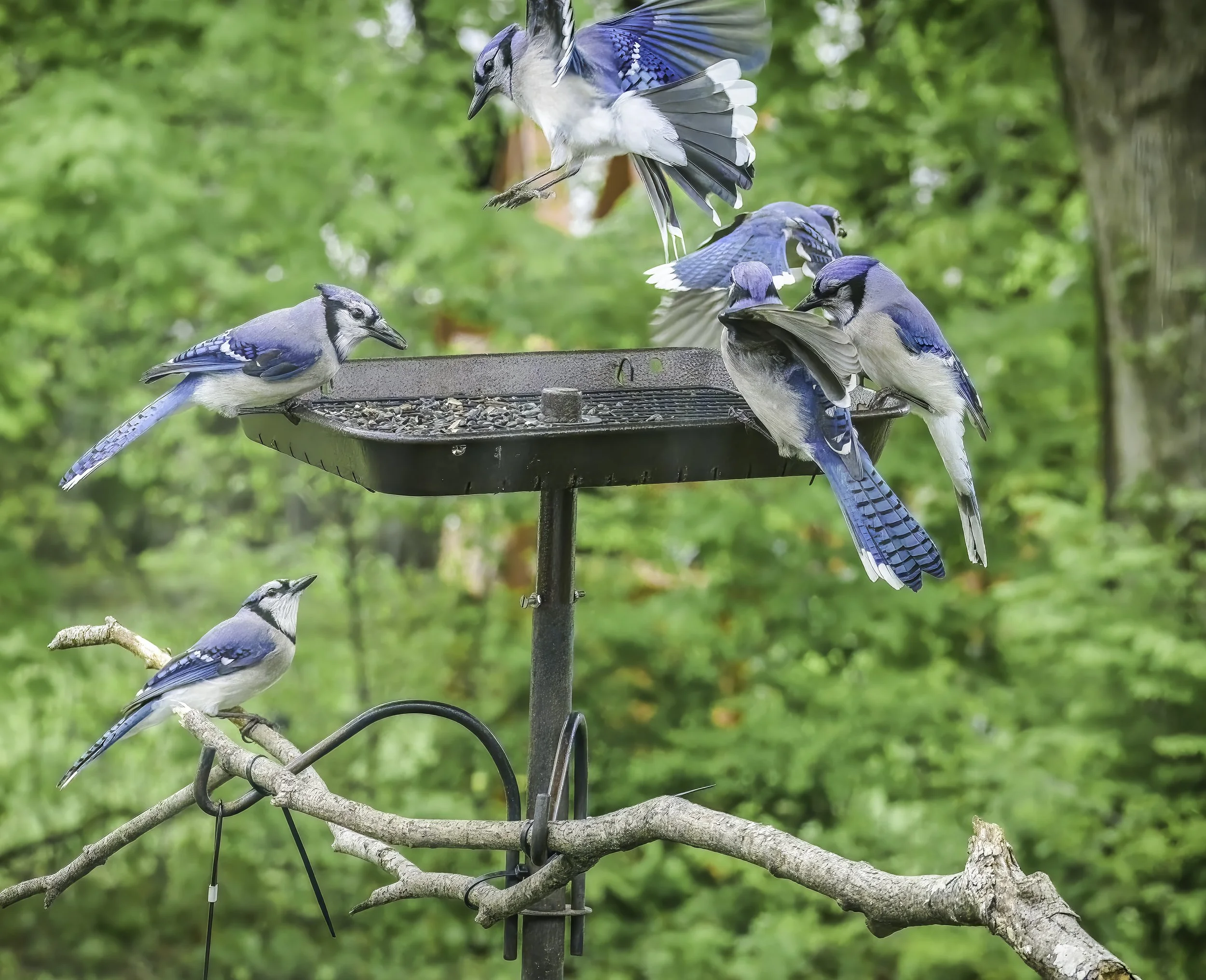
A Bluejay Jamboree - 4/30/26
Other blackbirds appearing along with the crows and jays included Red-wing blackbirds and Common grackles. With the larger species occupying the platform feeder, there was little room or tolerance for the smaller species which also like to frequent this feeder.
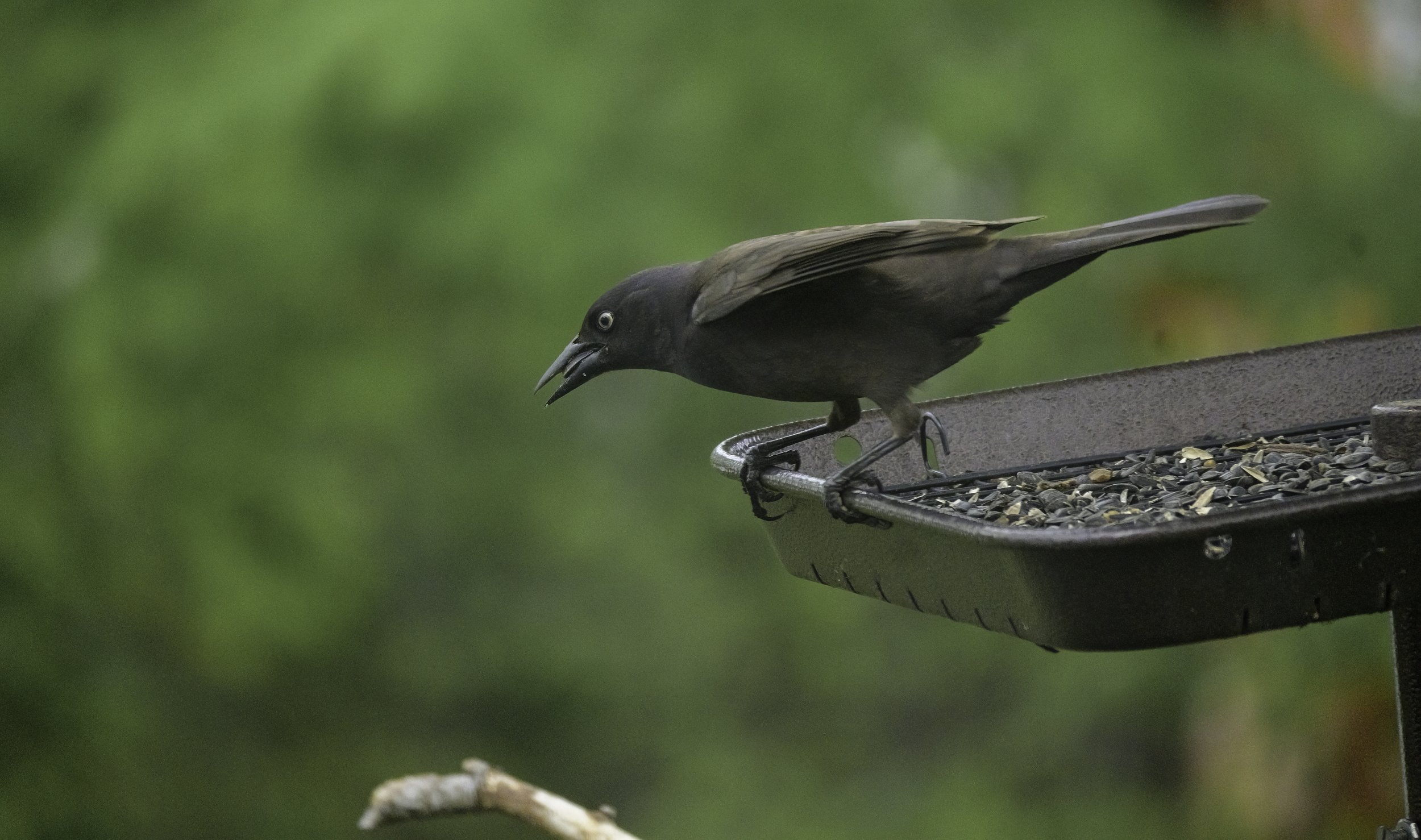
Common grackle - Back yard feeder
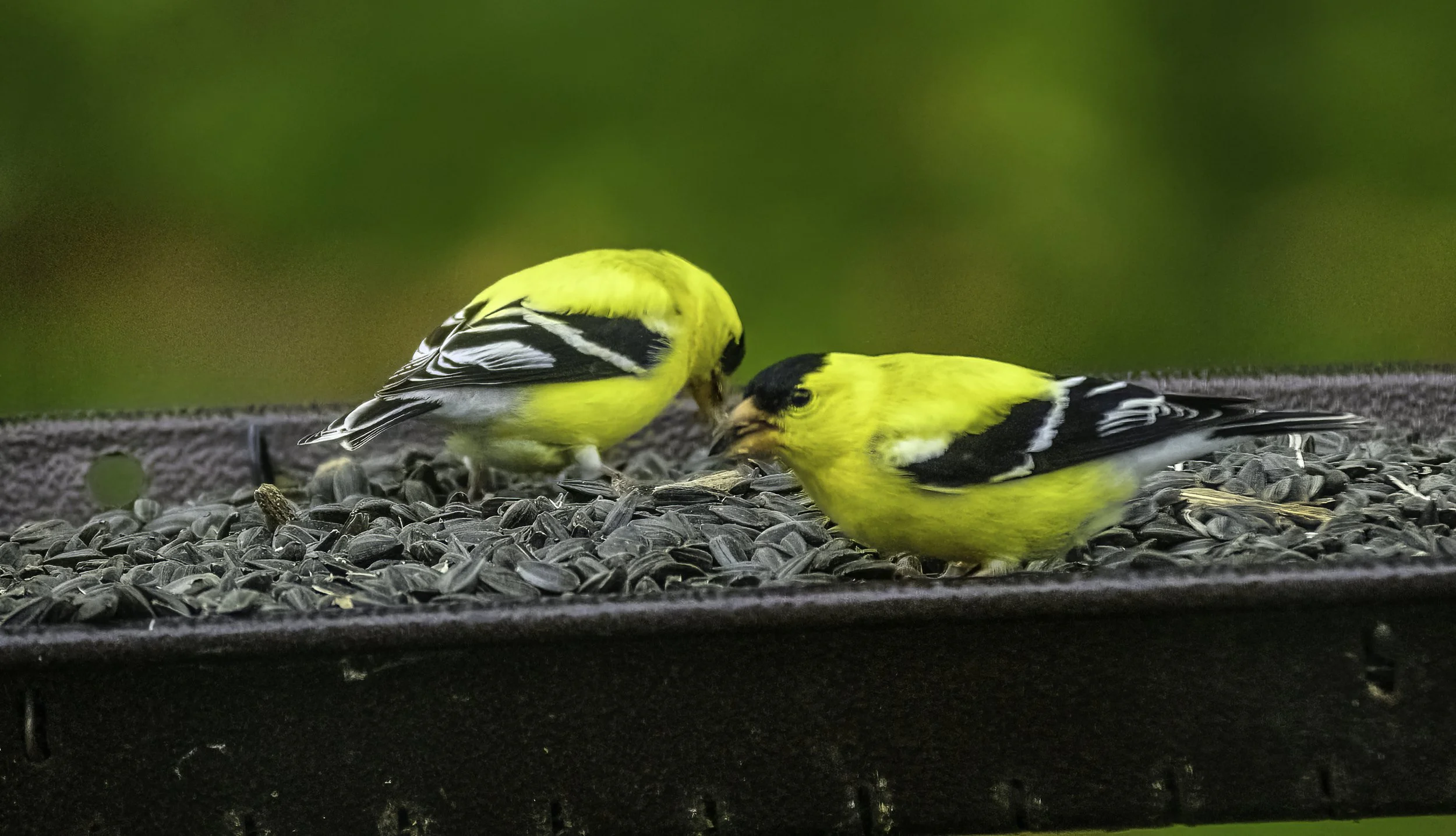
American goldfinches - Back yard feeder - 4/28/26
This pair of American goldfinches snuck in for a quick bite while the jays and larger blackbirds were taking a short recess. It was not long before the jays returned and reclaimed their turf, however.
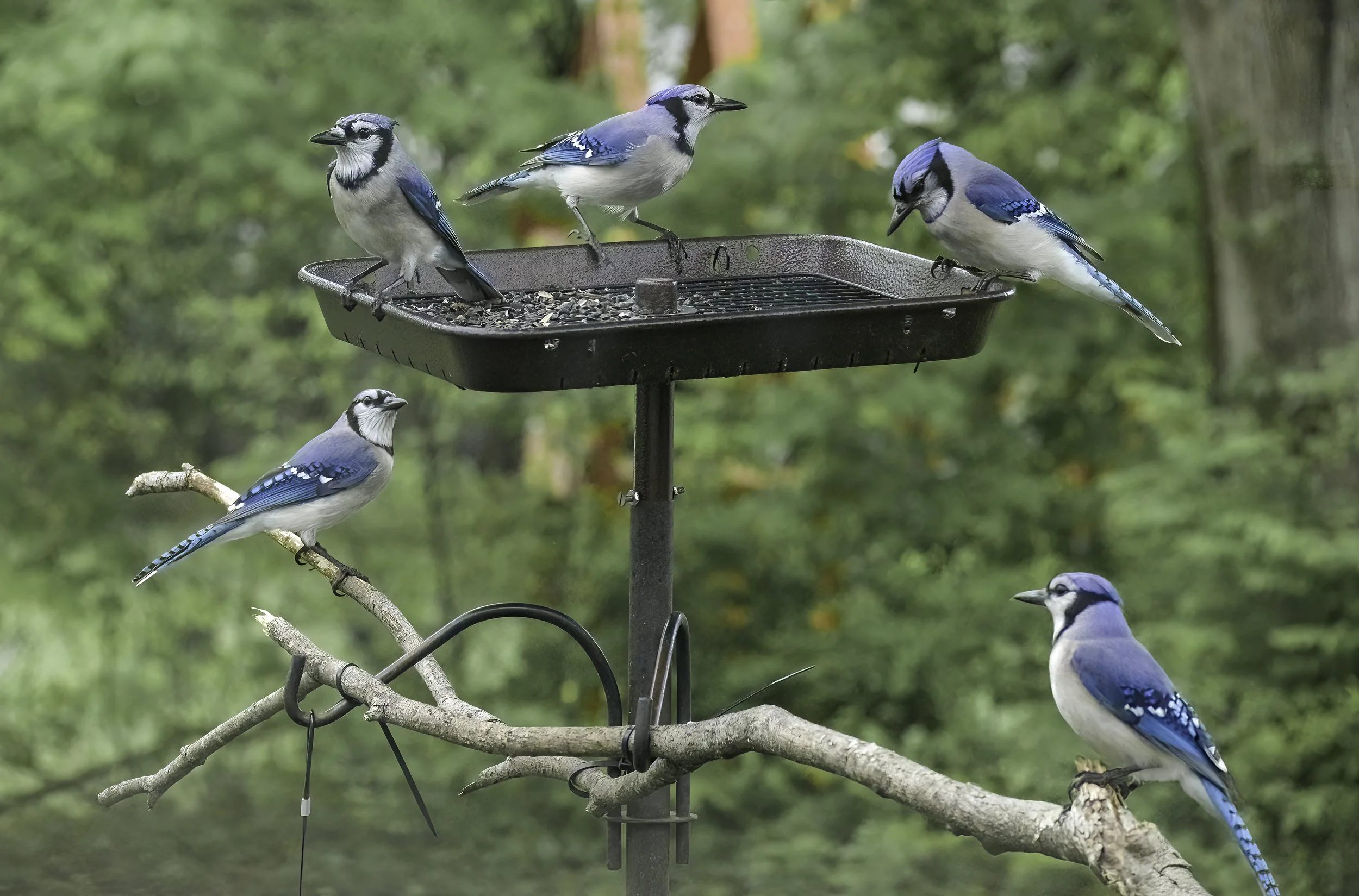
The “Jay feeder” - Back yard - 4/30/26
PS - Later in the week, we visited the Bashakill Wildlife Management Area which will be covered in a later post. During the morning of 5/2, there were at least three flocks of 30 plus jays that streamed over head beating a northerly course.